
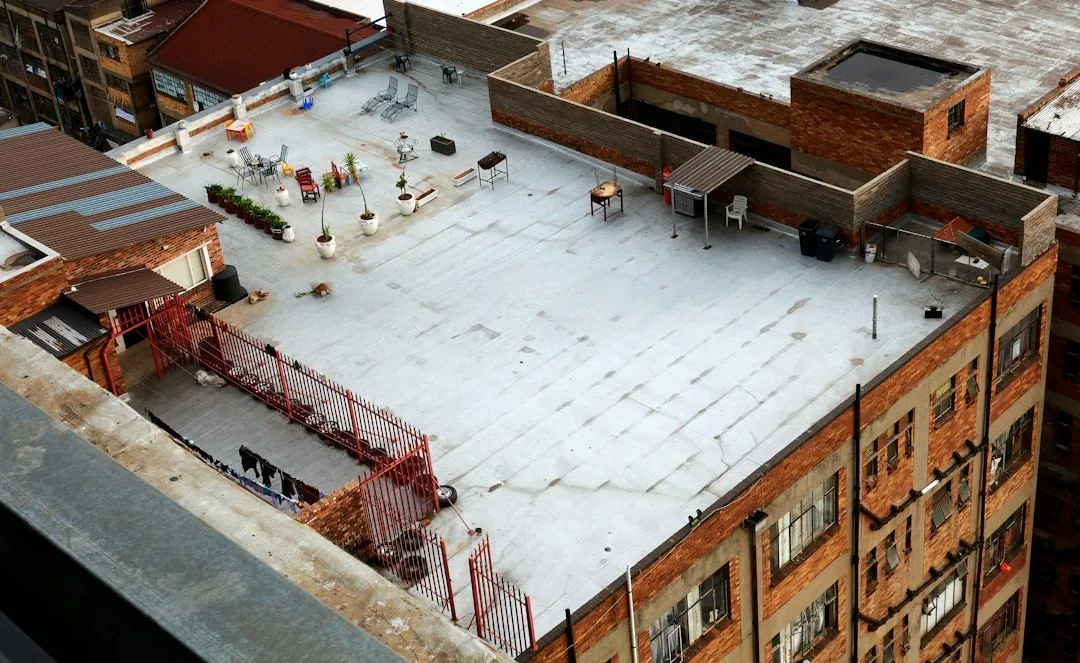
Standing Water on Flat Roof After Rain: Normal or a Problem?
Seeing standing water on flat roof after rain? Some of it is normal for a few hours while the roof drains and the surface dries. Water that stays for days, or collects in the same low area after every storm, points to a drain that is blocked, a slope that does not carry water to the drains, or a roof deck that has sagged. Each cause has a different fix, so the pattern matters.
This guide is for Chula Vista homeowners and property managers with flat or low-slope roofs on houses, garages, additions and commercial buildings. It explains how to tell a passing puddle from ponding, the three usual causes, how to keep a simple record, and what a roofer looks at.
How long should water stay on a flat roof after rain?
Not long. A common rule of thumb in the roofing trade is that water still standing about 48 hours after rain, in weather that allows drying, is ponding rather than normal drainage. Shallow puddles that are gone by the next day are usually not a concern. Signs of flat roof ponding water:
- The same spot holds water after every rain, not only after a big storm.
- Water is still there two days later in dry, sunny weather.
- A ring of dirt, stains or debris marks the edge where water sits and evaporates.
- The wet area looks larger or deeper than it did last season.
The 48-hour figure is a guideline, not a building code. Manufacturer terms for some roof systems also address ponding, so ask a roofer how it applies to the system on your building.
Why is ponding water a problem for a flat roof?
Water that sits for days wears a roof faster than water that drains off. The main effects are:
- The membrane or surfacing under the water ages faster from repeated wetting, drying and sun.
- The water adds weight, which can make an existing low spot deeper over time.
- Any small opening in a seam or flashing under the water stays wet, so a minor defect becomes a leak.
- Dirt and debris settle where the water dries, and plants or algae can take hold.
Standing water does not always mean the roof is leaking. It does make leaks more likely and harder to stop, because the weak point underneath is wet much of the time.
What causes water pooling on a flat roof?
Most flat roof drainage problems come from one of three causes, and a roof can have more than one:
- Obstructed drains: leaves, dirt, roofing gravel or debris collect over a drain, its strainer or a scupper at the roof edge. Water pooling around roof drains, in a ring that drains slowly, is the classic sign. It is often the simplest of the three to correct.
- Inadequate slope: a flat roof still needs a slight pitch toward its drains. If the original slope was minimal, or later additions, equipment or repairs changed it, water collects in areas away from any drain.
- Deck deflection: the structure under the roof can sag between its supports from age, moisture damage or added weight such as rooftop equipment. The low spot holds water, the water adds weight, and the sag can deepen.
Debris can block a drain on a roof that also has a low area, so the inspection should look at all three before any work is recommended.
How do you record standing water safely?
With dated photos taken from a safe vantage point and a short note after each rain. Do not walk on a wet flat roof or lean over a roof edge. A window or upper floor that overlooks the roof is enough. Keep a simple record:
- The date of the rain and roughly how much fell, from a weather app.
- Photos of the roof the same day, the next day and two days later, taken from the same spot each time.
- Where the water collects: at a drain, in the middle of a span, along a wall or next to equipment.
- How long it takes to disappear, and whether the area grows over the season.
- Any drips, ceiling stains or damp spots inside the building under that area.
A series of photos from the same position over several storms shows the size and duration of the pond, which a single visit on a dry day cannot show.
What does a roofer check on a roof with standing water?
Whether the drains are clear, how the roof slopes toward them, and whether the deck under the low area is sound. Reed Roofing works on flat roofs with TPO, EPDM and modified bitumen, and its flat roofing service puts particular attention on drainage, waterproofing and insulation. An evaluation of ponding typically covers:
- Drains, strainers, scuppers and downspouts, and whether clearing them changes the pattern.
- The membrane or surfacing in the ponded area, including seams, blisters and cracks.
- The slope of the roof toward the drains and where the low areas sit.
- Signs of deck deflection or moisture damage, from above and from below where the structure can be seen.
The findings shape the recommendation. Debris points to cleaning and regular upkeep. A low area may need added drainage or a change in slope. A sagging or damaged deck needs structural repair before new roofing goes on top. Read more about <a href="https://srreedroofing.com/services/flat-roofing">flat roofing services from Reed Roofing</a> and its guide on <a href="https://srreedroofing.com/blog/maintain-your-flat-roof">how to maintain your flat roof</a>, which lists ponding water among the common flat roof issues.
Frequently asked questions about standing water on flat roofs
Is it normal for a flat roof to have puddles after rain?
Shallow puddles that dry within a day or so are common on flat and low-slope roofs. Water that remains about 48 hours or more in drying weather, or returns to the same spot after every rain, is ponding and worth having checked by a roofer.
Can I sweep or pump standing water off my flat roof?
Only if the roof can be reached safely, and even then it treats the symptom. Walking on a wet membrane is a slip risk and can damage the surface. The lasting fix is clearing the drains or correcting the low area, which a roofer can assess.
Does standing water mean my flat roof is leaking?
Not necessarily. Many flat roofs hold water for a while without leaking. The concern is that any seam, crack or flashing defect under the water stays wet, so a leak becomes more likely over time. Check the ceiling under the area after each storm.
Can a roof coating fix ponding water?
A coating does not change the shape of the roof, so by itself it does not remove a low spot. Whether a coating suits a roof depends on its condition, moisture and drainage, which an inspection determines. Drainage problems are usually addressed first.
How often should a flat roof with ponding be checked?
Reed Roofing's flat roof maintenance guide suggests inspecting a flat roof at least twice a year and scheduling a professional inspection at least once a year. A roof with known ponding also benefits from a look after each heavy rain.
Get your flat roof drainage checked by Reed Roofing
Reed Roofing installs, repairs and maintains flat roofs for homes and commercial properties from its base in Spring Valley, CA, and serves Chula Vista, Spring Valley, Eastlake, National City, Imperial Beach and La Mesa. It assesses each roof in person and offers free estimates. Property owners can review <a href="https://srreedroofing.com/services/chula-vista-ca">Reed Roofing services in Chula Vista, CA</a>, call 619-421-5196, or <a href="https://srreedroofing.com/contact">request a free estimate</a> and share their record of where the water collects.